


Search isn’t what it used to be. Type a question into Google, and you’ll get an answer before you click anything. Ask your phone something, and it responds without showing you a website. Chat with an AI, and it pulls together information from across the web into a single response. The rules have changed, and so has optimization.
The New Playing Field
For over twenty years, optimization meant one thing: rank higher on Google. But now there are three different games happening at once, and you need to play all of them.
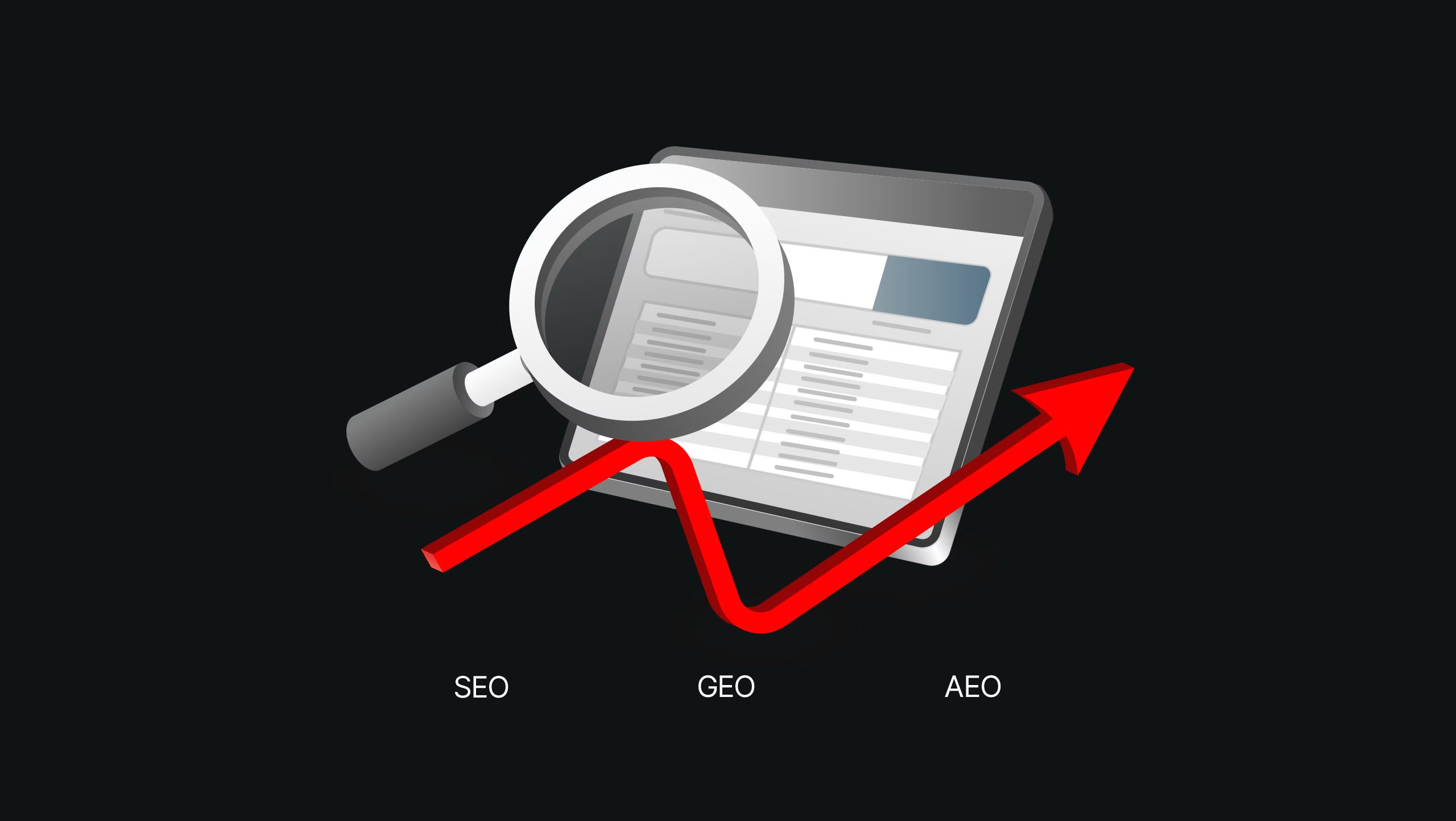
SEO still matters – it’s how you show up in search results. AEO is about being the answer, not just a link to one. GEO is the newest challenge: getting recognized by AI systems that are increasingly deciding what information people see.
Different objectives, different tactics, same underlying question: how do people find you?
SEO: The Classic Game
Traditional search optimization hasn’t disappeared, it’s just grown up. You’re still targeting keywords and building backlinks, but search engines are pickier now. They care about page speed, mobile experience, and whether your content actually helps people or just exists to rank.
SEO is infrastructure work. It’s making sure search engines can crawl your site, understand what you offer, and trust you enough to recommend you. When it works, it drives consistent traffic. When it doesn’t, you’re invisible to the majority of people looking for what you do.
The goal remains straightforward: appear in search results, get clicks, convert visitors. It’s measurable, it’s established, and it’s still the foundation everything else builds on.
AEO: Becoming the Voice
Answer Engine Optimization flips the script. Instead of competing for clicks, you’re competing to eliminate them.
Think about how you search when you’re cooking and your hands are covered in flour. “Hey Google, how many cups in a liter?” You want a number, not a webpage. Voice assistants, featured snippets, and AI overviews all serve these kinds of queries by delivering direct answers.
AEO means structuring your content so machines can extract and serve it as that answer. FAQ sections become strategic. Clear, conversational writing beats keyword-stuffed paragraphs. Schema markup – the code that helps search engines understand your content – becomes critical.
The payoff isn’t always traffic. It’s authority. When your business is the voice answering questions, people remember you. They trust you. And when they’re ready to buy, you’re already top of mind.
GEO: The AI Factor
Generative Engine Optimization is the new frontier, and it’s playing by different rules entirely.
Large language models like ChatGPT and Google’s AI overviews don’t just fetch information, they synthesize it. They read hundreds of sources, identify patterns, and generate responses that cite what they consider authoritative. The question is: will you be one of those sources?
GEO isn’t about keywords or backlinks. It’s about being genuinely knowledgeable in your space. AI models prioritize original research, unique insights, and content that adds something new. They notice when you’re consistently mentioned across trusted sources. They recognize topical authority.
This means thinking bigger than individual blog posts. Are you creating content that other sites reference? Do you provide data or perspectives that can’t be found elsewhere? Are you building a reputation that extends beyond your own domain?
When someone asks an AI for recommendations in your industry, you want your brand in that response, not as a footnote, but as a recognized expert.
Why All Three Matter
Here’s the thing: you can’t pick just one of these strategies and call it done.
SEO brings people to your digital doorstep. AEO answers their questions before they even knock. GEO makes sure AI systems know you exist when they’re compiling information.
Skip SEO, and you lose your baseline visibility. Ignore AEO, and you miss the growing number of people who never click past the answer box. Neglect GEO, and you’re absent from the AI-generated responses that increasingly guide decisions.
The brands seeing consistent growth in 2025 aren’t choosing between these approaches, they’re layering them. Their content ranks in traditional search, appears in featured snippets, and gets cited by AI assistants. They’re visible at every stage of how people discover information now.
Moving Forward
Search will keep evolving. AI will get smarter. New interfaces will emerge. But the core principle stays the same: be genuinely helpful, establish real expertise, and show up where your audience is looking.
At Parel Creative, we track these shifts closely because they directly impact how brands connect with customers. We help brands navigate SEO, AEO, and GEO with approaches designed for how people actually find information today. Let’s make sure your audience finds you, wherever they’re looking. Ready to adapt your approach? Let’s talk.