

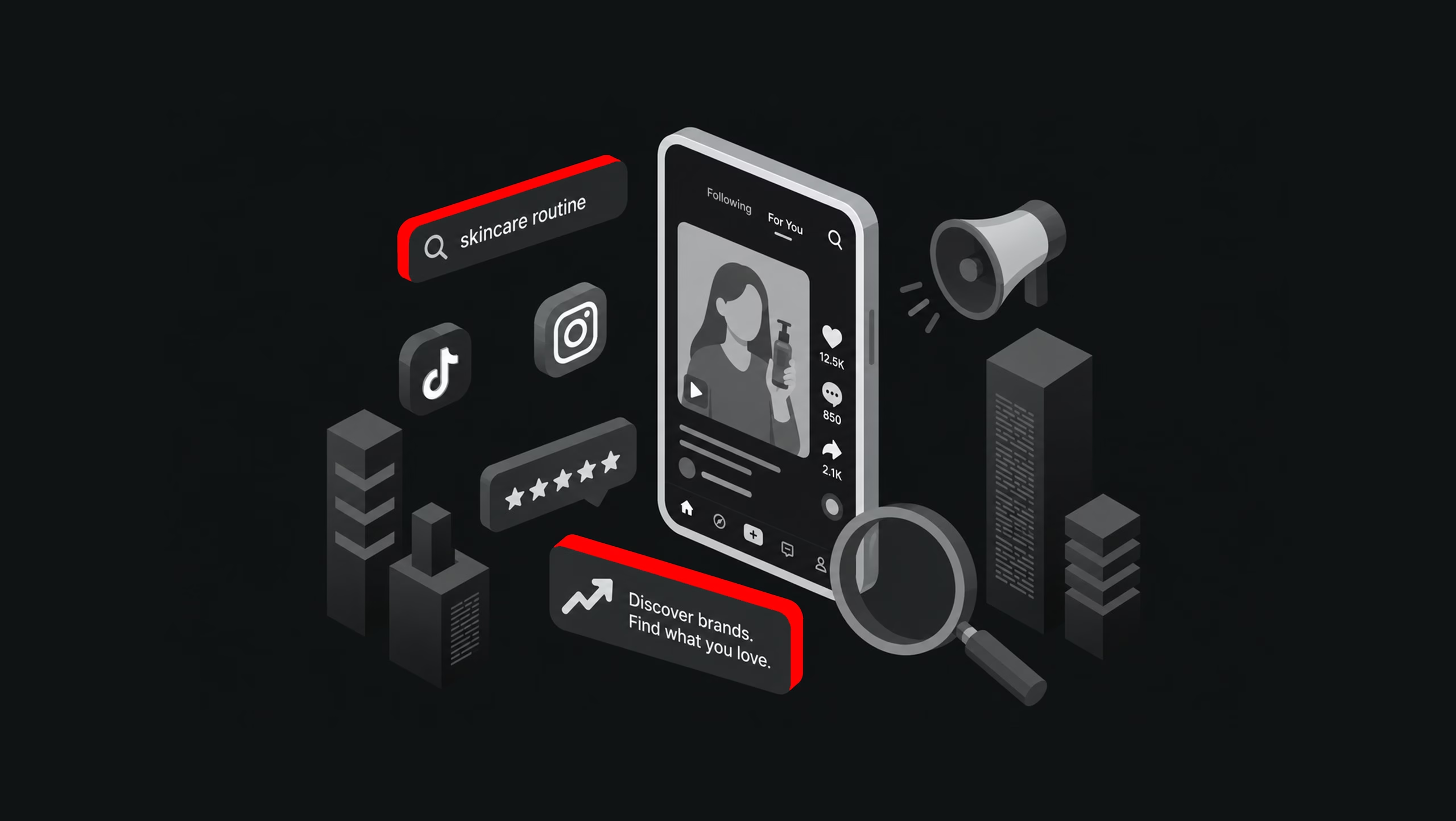
Picture this: A 22-year-old college student needs a new skincare routine. Instead of typing “best moisturizer for oily skin” into Google, she opens Instagram or TikTok. Within minutes, she’s watching real people with similar skin types share their honest reviews, complete with before-and-after videos and detailed product breakdowns. By the time she’s ready to buy, she’s already discovered three brands she’d never heard of—none of which showed up on Google’s first page.
While we’ve been obsessing over keyword rankings and backlink profiles, an entire generation quietly migrated their search behavior to platforms we barely considered “search engines.” They’re discovering brands, products, and services in their Instagram feeds, TikTok scrolls, and YouTube rabbit holes.
And if your marketing strategy hasn’t caught up, you’re essentially invisible to the customers who matter most.
When Platforms Become the New Search Engines
According to Forbes, Google usage among Gen Z has dropped 25% compared to Gen X users. Social media is rapidly becoming Gen Z’s top tool for product and brand discovery, with around 60-70% of Gen Z turning to platforms like TikTok and Instagram for their queries and discovery.
But this isn’t just about young people being different (though they are). It’s about fundamental shifts in how humans want to consume information in 2026.
Think about it: when someone searches “best running shoes” on Google, they get a list of articles written by people they’ve never heard of, packed with affiliate links and SEO-optimized fluff. When they search the same thing on TikTok, they get real runners showing their actual shoes, talking about blisters they got during their last marathon, and demonstrating how the soles look after 200 miles.
Which would you trust more?
The Anatomy of Social Search: Why it Works Better
The shift to social search isn’t just a trend; it’s a response to the basic limitations of traditional search.
Faster, More Visual Results: A 60-second TikTok can show you exactly how to fix your leaky faucet, complete with close-ups of the tools and real-time troubleshooting. Compare that to clicking through a blog post that takes three paragraphs to get to the point and assumes you already know what a pipe wrench looks like.
Real People, Real Opinions: Social platforms thrive on authenticity because fake enthusiasm is painfully obvious in video format. When someone searches for restaurant recommendations on Instagram, they’re not just seeing professional food photography—they’re seeing real people’s honest reactions, complete with stories about service quality and atmosphere.
Algorithm-Driven Discovery: Perhaps most importantly, social search doesn’t require users to know exactly what they’re looking for. TikTok’s For You Page and Instagram’s Explore tab surface relevant content based on behavior patterns, introducing users to brands and products they never would have searched for traditionally.
Community Validation: Social search is inherently social. Users can immediately engage with content creators, ask follow-up questions, and see how others in their community respond to recommendations. This creates a feedback loop that traditional search simply cannot match.
On social platforms, you’re not just reading one person’s opinion—you’re seeing hundreds of comments from real users sharing their experiences. It’s like having a focus group for every purchase decision.
The Instagram Indexing Game-Changer
July 2025 marked a pivotal moment in the evolution of social search. Instagram officially began allowing search engines like Google to index public content from professional accounts—a move that fundamentally reshapes how brands approach digital visibility.
This development isn’t happening in isolation. Adobe reports that 41% of Americans have used TikTok as a search engine, and for the first time in 15 years, TikTok has on occasion surpassed Google as the most visited site. TikTok has claimed that crown, and Instagram’s indexing move represents the platform’s strategic response to stay competitive in the search landscape.
But here’s what makes this particularly significant: Instagram’s inclusion ties directly into the booming rise of zero-click search and Google’s AI Overviews. Users increasingly find what they need directly in search results without visiting traditional websites. Instagram’s indexed content means brands can now appear in these AI-generated summaries, creating new pathways to discovery that bypass traditional website traffic entirely.
Brands That Saw This Coming
Forward-thinking companies aren’t waiting for this trend to mature, they’re actively reshaping their strategies around social search dominance.
Nike cracked the code by making their products discoverable through storytelling rather than advertising. Through interactive storytelling and strategic influencer collaborations, Nike transforms casual social browsing into seamless shopping experiences. Users don’t search for Nike, Nike appears exactly when and where users are most receptive.
L’Oréal Paris redefined beauty marketing through social-first discovery, generating $1.14 billion in media impact value in 2024 by centering campaigns around Paris Fashion Week and strategic influencer partnerships. Instead of hoping consumers will search for beauty trends on Google, L’Oréal ensures those trends emerge naturally through algorithm-driven social feeds.
The gaming industry provides perhaps the most compelling examples of social-first success. Loddlenaut, an indie game developed by Ricardo Escobar, found viral success primarily through TikTok marketing, with wishlist conversions driven by social engagement significantly boosting initial sales. Similarly, Chants of Sennaar gained massive traction through organic social buzz around its demo, with content creators and gaming communities driving visibility far beyond what traditional search marketing could achieve.
The End of Curiosity or the Evolution of Discovery?
Here’s what makes this shift so profound: traditional search is active (you go looking for something), while social search is passive (things find you).
This passive discovery model means brands can be found by users who didn’t even know they were looking. A skincare brand can reach someone scrolling through morning routine videos. A travel company can inspire wanderlust through stunning destination content. A B2B software solution can solve problems business owners didn’t realize they had.
TikTok’s For You Page doesn’t wait for you to ask questions; it answers questions you didn’t know you had. Instagram’s Explore tab introduces you to brands, products, and ideas based on subtle behavioral cues. YouTube’s algorithm can take you from a simple recipe search to discovering an entirely new cuisine.
This discovery model means brands can reach customers at the exact moment they’re most open to new ideas, not just when they’re ready to buy.

Beyond Keywords: The New Optimization Framework
The implications are staggering, and they go far beyond posting more videos.
Content Strategy: Integrating natural language into social media captions, utilizing alt text for accessibility and context, and optimizing profile information for both social algorithms and search engine indexing.
Cross-Platform Promotion: High-value content must be strategically promoted across Instagram, TikTok, Google Business Profiles, and company websites to maximize visibility across all search touchpoints. You can’t just be where your customers are today, you need to be where they’re searching. That might be TikTok for Gen Z, LinkedIn for B2B decision-makers, or YouTube for how-to queries.
Community Strategy: Engaged followers are the search signals. When people comment, share, and create content about your brand, they’re telling algorithms (both social and traditional) that you’re worth discovering.
B2B Applications: Even business-to-business brands can leverage these strategies through professional platforms like LinkedIn, sharing detailed educational content, industry insights, thought leadership, and customer success stories that position them as discoverable authorities in their fields.
AI Search Integration and Voice Discovery
The evolution doesn’t stop here. AI-powered search tools like Perplexity and ChatGPT search are creating new discovery pathways, while voice search continues to grow. Brands that optimize social content for these emerging channels position themselves for continued relevance as search behavior evolves further. The writing is on the wall or rather, it’s in the feed, the reel, the short-form video, and the community conversation.
Traditional SEO remains important, but it’s no longer sufficient. The brands that will dominate the next decade are those that understand search as a multi-platform, community-driven, authenticity-focused discipline.
The Path Forward
Gen Z has already moved their searches to social platforms, and other demographics are following. Instagram’s indexing capabilities have bridged social and traditional search in unprecedented ways. Successful brands are already redefining discovery through authentic, community-driven content strategies.
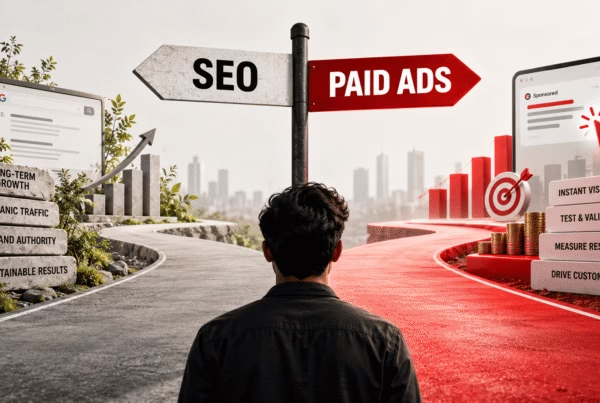
This doesn’t mean abandoning SEO entirely. Traditional search optimization remains important for certain types of queries and user behaviors. But it means recognizing that SEO alone is insufficient when your target audience increasingly discovers brands, products, and services through social platforms.
At Parel Creative, we understand that the future of digital visibility requires strategies that go far beyond traditional SEO. We stay ahead of rising trends in social media marketing and search behavior, equipped with the tools and expertise to help your brand grow by meeting your audience exactly where they’re searching—whether that’s Instagram, YouTube, or the next platform that emerges. Because in 2026, being found isn’t just about ranking on Google anymore. It’s about being discovered wherever your customers are looking.