


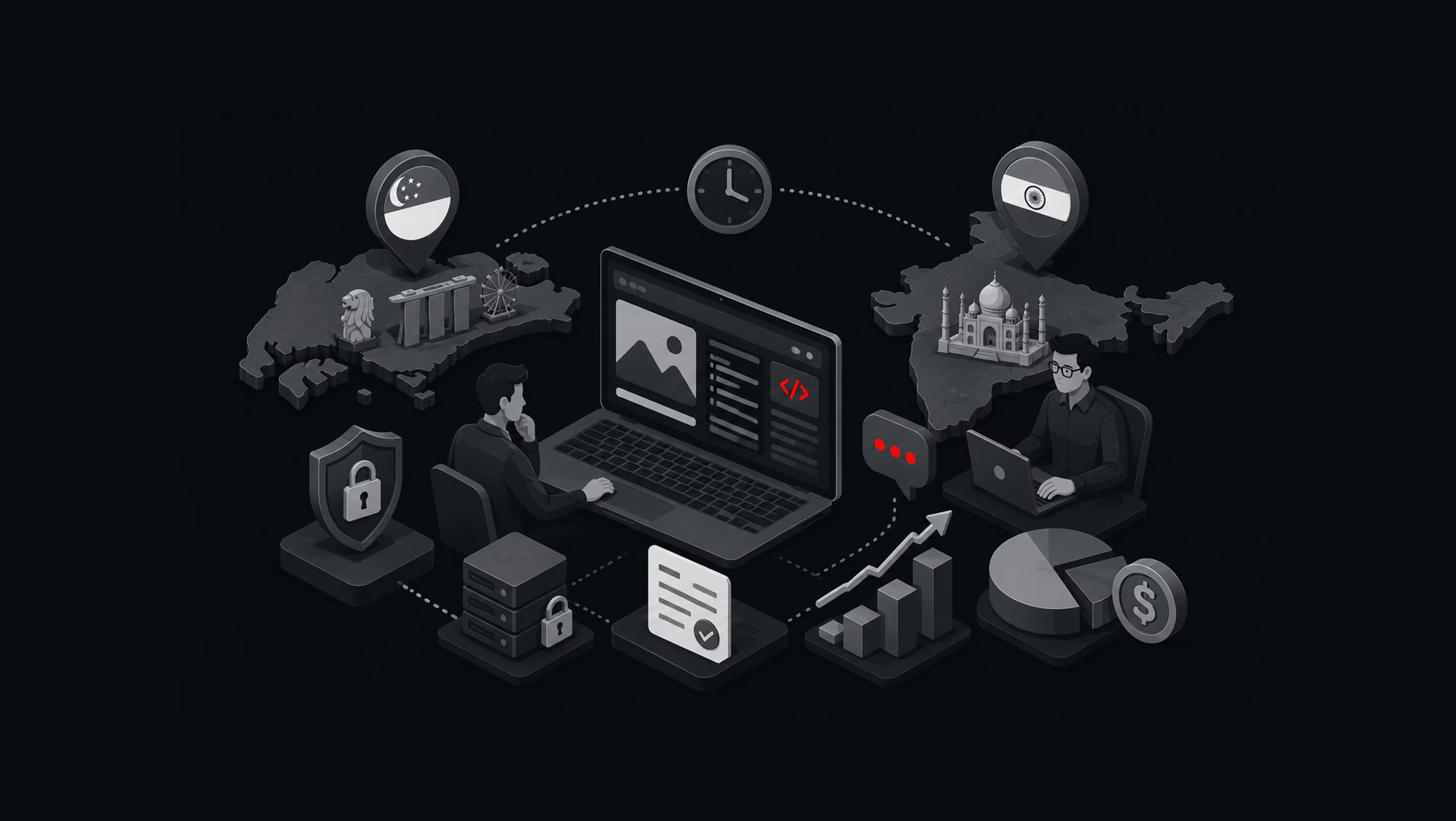
Building a website as a Singapore SME means balancing government subsidies against your actual technical needs. Staying local qualifies you for the 50% Productivity Solutions Grant (PSG), but it usually locks you into rigid, off-the-shelf templates. Hiring overseas means losing the subsidy — but it opens the door to fully custom development at a significantly lower cost.
If you decide to look to India, the right agency is one that ensures strict PDPA compliance, offers flexible month-to-month contracts, and has a proven track record working with businesses in the APAC region.
Key Takeaways
- How the PSG grant can restrict your digital ambitions
- The time-zone, cost, and communication advantages of Indian agencies
- The exact criteria to use when vetting an Indian agency for your Singapore business
Navigating the Singapore “Grant Trap” (PSG)
Any discussion about SME digitalization in Singapore has to address government subsidies upfront.
The Productivity Solutions Grant (PSG) covers up to 50% of digital adoption costs, capped at S$30,000. To qualify, you must use pre-approved local vendors. For basic e-commerce storefronts or standardized CRM setups, this works well.
The problem starts when you need something more custom. Pre-approved solutions are frequently too rigid for businesses that want a distinctive website, complex third-party integrations, or a platform they can actually scale. You end up paying for a template that almost fits – and rebuilding it anyway, two years later.
So how do you justify losing the grant?
The key question is cost-to-value. If an Indian agency delivers a fully custom, scalable website at a total cost that still comes in under what a local vendor would charge after the grant, the math works in your favour. For anything beyond a basic storefront, this is often the case.
The core India advantage for Singapore businesses
India’s appeal as a development destination goes beyond lower rates. There are three specific advantages that matter for Singapore SMEs.
1. Access to modern, custom-build expertise
As Singapore SMEs grow, they often outgrow basic website builders and need something built properly from the ground up – custom design, cleaner code, and the ability to connect with other tools and platforms without workarounds. India has a deep and concentrated pool of developers who specialise in exactly this kind of work. Bypassing the local vendor list gives you direct access to that talent, rather than being restricted to generalist template builders.
2. Real-time collaboration without the time zone problem
India Standard Time (IST) sits just 2.5 hours behind Singapore Time (SGT). In practice, this means your Indian agency is online and reachable throughout your working day. Feedback gets actioned the same day. Questions don’t sit unanswered until the next morning. For fast-moving SMEs, this kind of responsive collaboration matters more than most clients anticipate.
3. Communication and cultural alignment
Working across borders only runs smoothly if your agency genuinely understands your market. India has a long track record of delivering for Southeast Asian clients – regional aesthetic sensibilities, B2B communication norms, and familiarity with local business contexts are all well-established. You are not starting from scratch explaining what your audience expects.
Strict evaluation criteria for Indian web developers
A strong portfolio is not enough. Singapore SMEs need to apply specific, localized criteria when vetting an offshore partner.
1. PDPA compliance and data security
Singapore enforces strict data privacy rules through the Personal Data Protection Act (PDPA). When an Indian agency handles your user data, they are legally classified as a Data Intermediary under Singapore law. This means you cannot simply hand over customer data without a formal agreement in place.
What to ask for:
- A written contract that specifies how your data will be stored, encrypted, and protected
- Clear breach notification procedures
- Confirmation that their data handling practices meet the standards required under PDPA’s Transfer Limitation Obligation
Any reputable agency will have dealt with this before. If they cannot answer these questions clearly, move on.
2. Design philosophy and brand intelligence
Your agency should function as a creative partner, not just a build team. The distinction matters most in the brief and discovery stage – do they ask the right questions? Do they push back intelligently on poor design decisions?
Look for teams that demonstrate an understanding of refined, brand-led design. If your business requires a restrained, considered aesthetic, make sure the agency’s portfolio reflects that sensibility, not just technical execution.
3. Contractual flexibility
Avoid multi-year lock-ins. SMEs need room to adapt as market conditions shift. Look for agencies that offer rolling, month-to-month retainers with clearly defined scope and exit terms. The commercial structure should flex with your business, not constrain it.
4. APAC-specific track record
Do not accept a portfolio made up entirely of US or UK clients. Ask specifically for case studies from Southeast Asian businesses. Then verify those claims independently – platforms like Clutch or GoodFirms carry verified client reviews, and a pattern of positive feedback from regional clients is a reliable signal.
Frequently asked questions
Do I lose the PSG grant if I hire an Indian web development agency?
Yes. The PSG requires SMEs to use pre-approved local vendors. Hiring an offshore agency makes the project ineligible for the subsidy.
What is the time difference between India and Singapore?
Indian Standard Time (IST) is 2.5 hours behind Singapore Time (SGT). This overlap allows for real-time collaboration during normal working hours.
How do Indian agencies comply with Singapore’s PDPA?
Reputable agencies address this through formal contracts that enforce data protection obligations consistent with Singapore’s Transfer Limitation Obligation — covering how data is stored, encrypted, and what happens in the event of a breach. Compliance is contractual, not assumed.
Is it safe to share customer data with an Indian web agency?
Yes, provided the right legal agreements are in place. Under the PDPA, the agency acts as a Data Intermediary and must sign a contract that enforces appropriate data protection standards. Always verify this before sharing any customer information.

Choosing the right Indian web development agency requires clear-eyed vetting against Singapore’s regulatory and operational realities. Bypassing a local grant feels counterintuitive, but for SMEs that need a genuinely custom, scalable website, the quality and cost efficiency of Indian development talent frequently makes the decision straightforward.
Prioritise agencies that handle PDPA compliance professionally, offer flexible engagement terms, understand your brand, and have real experience delivering for clients in the region.
If you need a digital partner built around exactly these criteria, explore Parel Creative. We deliver custom web architecture and considered design for SMEs that are ready to compete — and we integrate directly into your team’s workflow from day one.