

If you ask five web professionals what a website costs in India today, you will likely get five completely different figures ranging from ₹15,000 to ₹15,00,000 or more.
The wide gap in quotes isn’t necessarily because developers are inflating their prices. The truth is that “website” is an umbrella term for entirely different digital products. One provider might be configuring a pre-made template on a shared server, while another is mapping out a custom user journey, crafting a high-end brand narrative, and building a fast, scalable lead-generation system.
To help you plan your budget without the guesswork, let’s break down the realistic cost structures across India’s web development ecosystem.
The Master Pricing Matrix by Website Type
The single biggest cost driver is what you need the website to do for your business. Based on current standard industry metrics, projects generally fall into these distinct categories:
- The Digital Brochure (Basic Static Presence)
- What it is: A 3 to 5-page responsive site (typically covering Home, About, Services, and Contact) with standard contact forms. It acts as a reliable online identity for users looking you up after a referral.
- The Reality: The lower end of this bracket relies entirely on pre-built design layouts where your content is dropped into existing placeholders.
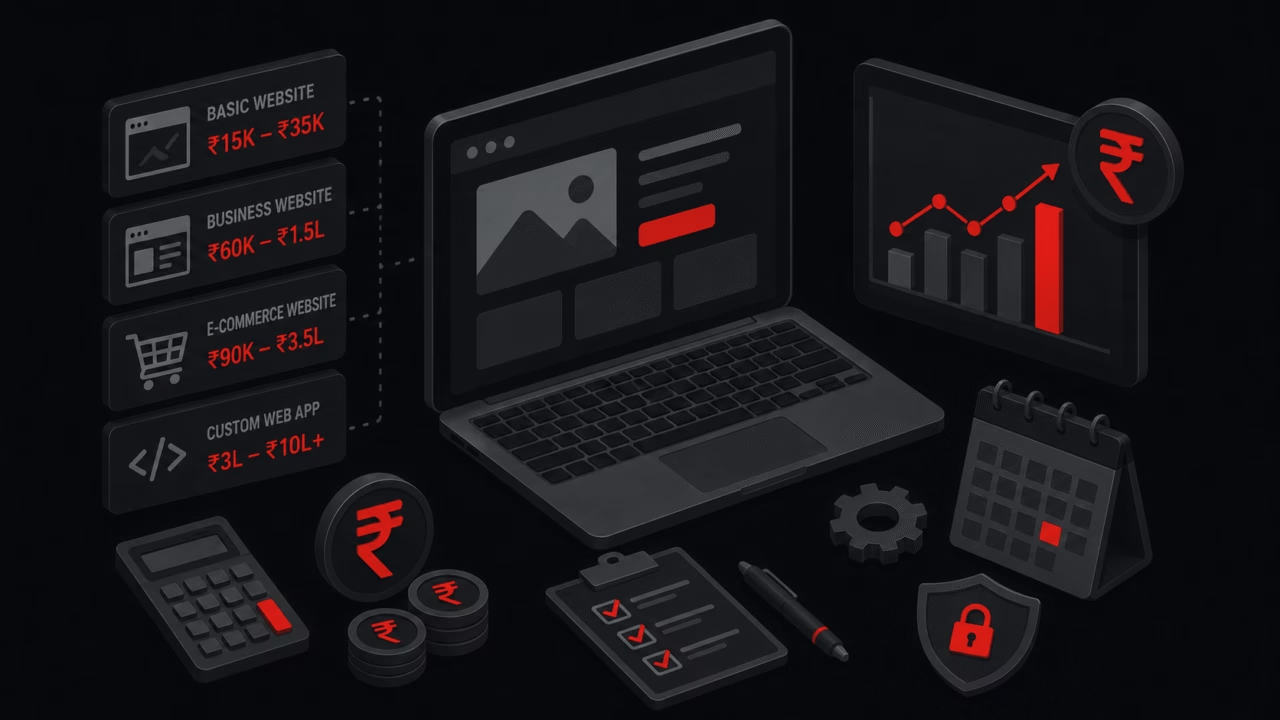
- Current Market Baseline: ₹15,000 – ₹35,000
- The Growth-Focused Business Site (Standard CMS)
- What it is: A fully manageable 8 to 15-page site built on platforms like WordPress or Webflow. It includes content management tools so you can update blogs or services internally, structured lead-capture paths, and tailored page layouts.
- The Reality: This tier covers proper layout planning, fundamental mobile performance optimization, and clean structural SEO setup.
- Current Market Baseline: ₹60,000 – ₹1,50,000
- The Digital Storefront (Standard E-Commerce)
- What it is: A fully functional online store managing up to~500 products. It includes native inventory alerts, shopping carts, checkout workflows, and integrations with standard Indian payment gateways and local logistics APIs.
- The Reality: This scale typically utilizes Shopify configuration or mid-complexity WooCommerce development. Note that third-party platform subscription fees are charged separately from the initial setup cost.
- Current Market Baseline: ₹90,000 – ₹3,50,000
- Custom Platforms & Web Applications
- What it is: Completely bespoke web software built from the ground up using modern technology stacks like MERN or Next.js. This includes customer portals, custom booking engines, multi-vendor setups, or SaaS products requiring complex data routing.
- Current Market Baseline: ₹3,00,000 – ₹10,00,000+
Evaluating Your True Cost: The Structural Criteria
Looking only at the final number in a quote can lead to overspending on a rigid site, or underscoping an important system. When reviewing a proposal, check whether it explicitly covers these three variables:
1. User Interface (UI) & User Experience (UX) Architecture
Designing user journeys in Figma before development prevents expensive layout fixes later down the road.
- The Template Approach: The developer modifies a pre-existing commercial layout. This keeps upfront costs low but restricts your ability to tailor the user journey and can slow down performance due to unnecessary background code.
- The Custom Prototype Approach: A designer builds tailored wireframes and visual flows from scratch in prototyping tools like Figma. You approve the exact layout, navigation logic, and responsive behaviour across devices before development begins. This process ensures the final site perfectly mirrors your brand identity.
2. Native SEO & Asset Readiness
Many business owners assume a new website will automatically rank on Google, but technical SEO requires deliberate setup from the start.
- Basic Layout Setup: Lower-end packages often limit SEO to simply installing a free plugin. They leave meta tags, image alt texts, and page descriptions blank for you to fill in later. Furthermore, they rarely optimize server-level configurations, which can leave your site slow and difficult for search engines to index properly.
- Production-Ready Engineering: Higher-value development ensures the site is technically ready for search engines from day one — with proper heading hierarchies (H1, H2, H3), clean URL structures, automated XML sitemaps, compressed assets, and fast mobile rendering. This foundation means your site is ready for marketing or organic traffic the moment it launches.
3. Third-Party Tech Integration
Simple embedded contact forms are straightforward. However, syncing data with CRMs, ERP platforms, inventory software, or custom booking engines requires specialised backend configuration and API work, which increases the overall investment.
The True Cost of Ownership: Annual Overheads
A website is not a one-time purchase. It functions like digital real estate that requires ongoing upkeep to remain safe, fast, and visible. These are the recurring infrastructure and maintenance costs to budget for each year:
- Domain Registration (.in or .com): ₹700 – ₹1,500 per year.
- Web Hosting Infrastructure: ₹3,000 – ₹12,000 per year for standard VPS or managed hosting. High-traffic e-commerce or custom applications on cloud platforms like AWS or DigitalOcean scale from ₹25,000 per year upwards
- Security Certificates (SSL): Baseline Let’s Encrypt certificates are typically bundled free with reputable hosting. Enterprise setups requiring OV/EV wildcard certificates cost an additional ₹3,000 – ₹8,000 annually.
- Technical Maintenance & Security Retainers: Active management – covering security patches, database backups, plugin updates, and bug fixes – averages 15–20% of the initial development cost per year.
Choosing the Right Value Tier
The most useful question to ask isn’t “What is the cheapest option?” but rather “What does this asset need to do for my business?”
If you need a basic placeholder to confirm you exist online, a standard template fits perfectly. But if your website is your primary channel for building brand credibility, running a direct-to-consumer store, or capturing high-intent leads, it should be treated as a strategic investment rather than a tech expense.
If you are trying to figure out the right scope and budget for your next project, let’s talk. At Parel Creative, we map out the entire technical and design strategy upfront so you know exactly what you are paying for, and what kind of return to expect.