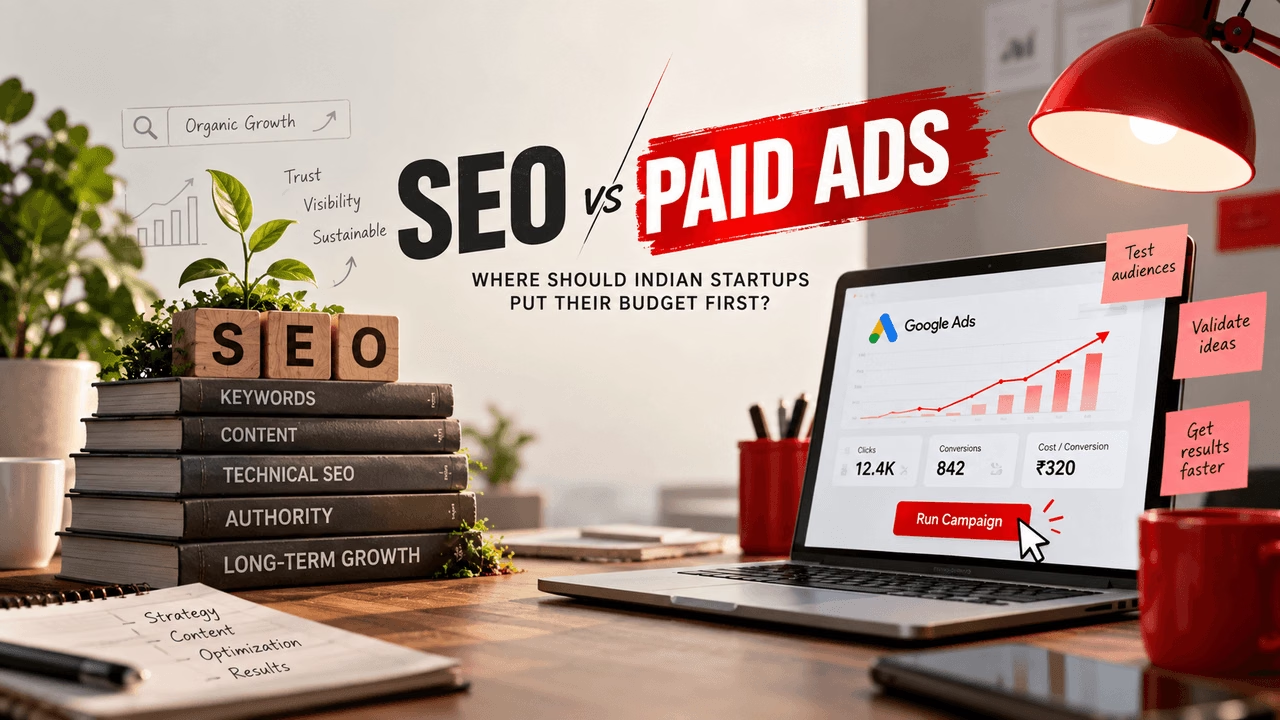


For a startup with limited money, the question isn’t really SEO or paid ads?
The real question is what the marketing budget needs to achieve right now.
If the startup needs to find out whether people will actually buy its product, waiting for organic traffic isn’t particularly useful. If the product already has proven demand, relying entirely on ads isn’t a great long-term strategy either.
The right answer depends on the business, its customers and how quickly it needs results.
The biggest factor: search demand
Before spending heavily on SEO, ask:
Do our customers actually use search to find what we sell?
A founder might start producing dozens of blog posts because SEO is considered a long-term investment. But if there is little relevant search demand, that investment may generate very little business.
Look beyond search volume. Search intent, relevance, competition and conversion potential matter more.
Someone searching ‘best CRM software for small businesses in India’ is close to buying. Someone searching ‘what is CRM?’ is not.
The same applies to paid search. A high-volume keyword isn’t automatically worth paying for if the people searching it aren’t likely to become customers.
How quickly do you need an answer?
This is where paid advertising can have an advantage.
For a young startup, paid campaigns can provide relatively fast feedback on audiences, messaging, offers and landing pages.
A SaaS startup, for example, could test different positioning through paid campaigns and learn which audience or message produces qualified leads. A D2C brand launching a new product can do the same.
The useful questions are:
- Which audience converts?
- Which offer gets attention?
- Which keywords show buying intent?
- What does customer acquisition cost?
- Which landing page performs better?
But traffic is not validation. Revenue is.
Clicks are useful only when they lead to qualified leads, customers and sustainable economics.
What can the startup afford to get wrong?
Speed isn’t the only consideration. Runway matters too.
A startup with limited money and a short runway can’t necessarily afford to wait indefinitely for organic growth. If the immediate priority is testing an offer, entering a market or finding its first customers, faster feedback may be more valuable.
If the startup already understands its audience, knows what converts and has enough runway to build a long-term acquisition channel, the calculation changes.
The cost of waiting should be part of the marketing decision.
What are you actually paying for?
SEO and paid search solve different problems.
SEO improves a website’s visibility in organic search. Google describes SEO as helping search engines understand content and helping users find websites through search. It also makes clear that there are no tricks that guarantee a first-place ranking.
Paid search buys visibility for relevant searches through an advertising platform. It can put a startup in front of potential customers much sooner, but that traffic remains tied to advertising spend.
The simplest distinction is:
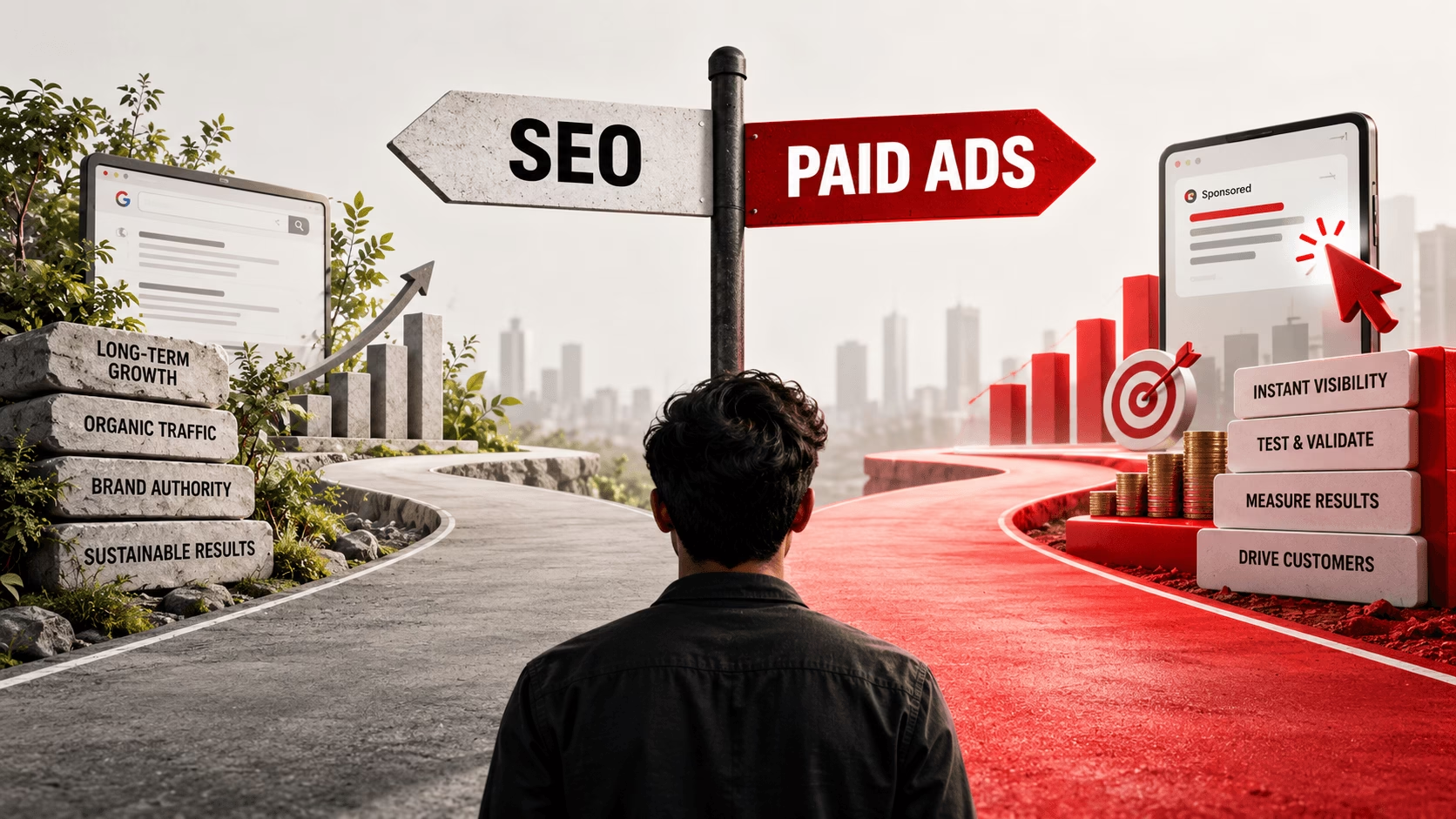
Paid ads buy immediate opportunities. SEO builds an acquisition channel over time.
Neither is automatically cheaper.
When does SEO deserve more budget?
SEO becomes more attractive when there is established search demand around the problem a startup solves.
If people regularly search for a product category, service, comparison or problem the startup addresses, there is an opportunity to build pages that capture that demand organically.
The benefit is that successful organic pages can continue attracting relevant visitors without paying for every individual click.
But SEO isn’t free traffic. It requires technical work, content, research, internal linking, measurement and ongoing improvement.
There is also no guaranteed timeline for rankings.
So SEO makes more sense when there is enough demand to capture, enough runway to build visibility and a product that is ready to convert that traffic.
Competition changes the calculation
Indian startups are operating in an increasingly competitive digital market. Dentsu’s 2026 India research puts the country’s advertising market above ₹1.2 lakh crore, with digital accounting for nearly 60% of total ad spend.
That competition affects both channels.
In paid search, competitive keywords can become expensive. In organic search, established brands, marketplaces and publishers may dominate results.
A keyword with 50,000 monthly searches isn’t necessarily a better opportunity than one with 2,000.
The smaller keyword might have stronger buying intent, less competition and a better conversion rate.
The question isn’t simply how many people search for this?
It is how valuable is this search to our business, and how difficult is it to capture?
Measure the channels against business outcomes
Instead of comparing SEO and ads on clicks or CTR alone, look at:
Customer acquisition cost: What does it cost to acquire a customer?
Conversion rate: How many visitors become leads or customers?
Customer quality: Are those leads actually becoming paying customers?
Customer lifetime value: How much revenue does a customer generate?
Payback period: How long does it take to recover acquisition costs?
Time to result: How quickly does the channel contribute?
Compounding value: Does today’s investment continue producing results later?
A channel that brings more traffic isn’t necessarily the channel that deserves more budget.
So, where should the budget go first?
There is no universal 70:30 or 60:40 rule.
For a startup still testing its offer, paid acquisition can provide useful feedback faster. Once the audience, positioning and conversion path are clearer, SEO can become a stronger long-term investment, particularly where there is sustainable search demand.
That doesn’t mean doing one and waiting to start the other.
Paid campaigns can reveal which audiences, problems and messages produce qualified customers. Those insights can then inform landing pages, service pages and SEO content.
The better question is:
Where will the next ₹1 lakh generate the most valuable customers, and will that investment keep working after you stop spending it?
For some startups, the answer will be paid acquisition. For others, it will be SEO. For many, it will be a deliberate combination of both.
At Parel Creative, we work across SEO, digital marketing, content, design and technology, helping businesses build the larger acquisition journey rather than treating each channel as an isolated service.